

When a little black and white kitten fell from a ledge on Fifth Avenue, everyone who witnessed the event placed the blame on the ASPCA and the fire department. We’ll never know who was at fault, but what I want to know is this: Was this in fact a pet cat of Charlotte Augusta Astor?
The story began on November 21, 1894, when a man named J.H. Stetson saw the kitten on a stone lintel above a fourth-floor window at 320 Fifth Avenue, which was owned by Dr. Christopher Bell and his wife Mary. According to servants in this home, the kitten had been there for two days. Dr. Bell said the cat had originally crawled out from a top-floor window at 324 Fifth Avenue and made its way across the lintels to the Bell’s townhouse.
The magnificent home at 324 Fifth Avenue was owned by Charlotte Augusta Astor, the daughter of the late William Backhouse Astor Jr. and Caroline Astor (the notorious Mrs. Astor of The Four Hundred list). Which is why I’d like to think that the cat in this story is a feline Astor (probably just wishful thinking, but it makes for a good story).
Upon seeing the kitten stuck on the ledge, Mr. Stetson called the police, who in turn called the ASPCA. An officer from the ASPCA responded, and he allegedly placed catnip on the lintels to lure the cat into an open window. The catnip did not work, and the officer left the scene without taking any further action.
The following day, someone contacted the fire department about the stuck kitten. Hook and Ladder Company 12 responded, and at the suggestion of Dr. Bell, the men gained access to Ms. Astor’s residence and opened the window on the upper floor (the ledge of this window was apparently at the same level as the lintels on 320 and 322 Fifth Avenue).
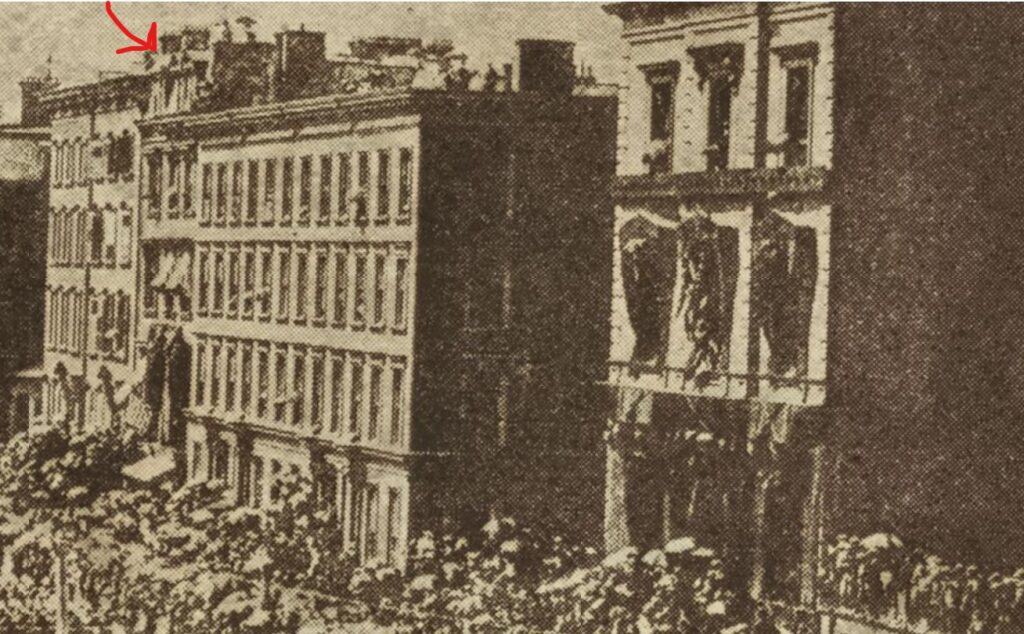
While the firemen were trying to shoo the kitten toward the open window, the cat jumped across several lintels, making her way from #320 to #322. But before she could reach the Astor home, the cat lost her footing and fell. No one saw what happened to the cat after that–she somehow magically disappeared.
Many people in the crowd who were watching the feline catastrophe blamed the fire department for using a hook to push the cat off the lintel. Accusations started flying all over the place–even the women of the Midnight Band of Mercy got involved, blaming both the ASPCA and FDNY Chief Ed Croker for negligence. Croker told the press that the firemen never brought a hook into the building, and none of the men pushed the cat.
When asked where he thought the cat had gone, Croker said, “It was as if the earth had opened and swallowed her.” He said that one of the women from the Band of Mercy who fed homeless cats said she was ready to rescue the cat, but “no trace of it could be found.” Hopefully she landed on all four feet and scampered quickly away from the crowd.
A Brief History of the Bell and Astor Homes
The history surrounding this section of Fifth Avenue where the Astor cat story took place gives us a glimpse into the lives and scandals and “troubles” of the upper class during the Gilded Age.
This block was once owned by the Corporation of the City of New York. In 1799, John Thompson purchased 20 acres of this common land, bounded by about 32nd to 35th Streets and Fifth and Madison Avenues.
In 1825, Isaac Lawrence and his brother Thomas–both prominent merchants with offices on Pearl Street–purchased the land from Thompson (who had run into financial trouble) for $14,000. Two years later, William Backhouse Astor Jr. bought Thomas’ portion of the land for $20,500. And then in 1840, Isaac Lawrence and Astor split Isaac’s portion, each getting 124 building lots. Over the next few years, Lawrence and Astor continued to purchase additional property in this neighborhood.
In 1843, Isaac Lawrence’s lots were sold at auction (reportedly, his son William Beach Lawrence, a once-successful jurist who was married to Hetty Gracie, a daughter of Archibald Gracie of Gracie Mansion, had run up some extensive debts, so Isaac had to sell his property to bail out his son). The soggy lot on the northwest corner of Fifth Avenue and 32nd Street was purchased by T. Putnam for just $600. Putnam later said it was one of the worst purchases he had ever made, believing that even a 700-foot pole would not find bottom on the lot.
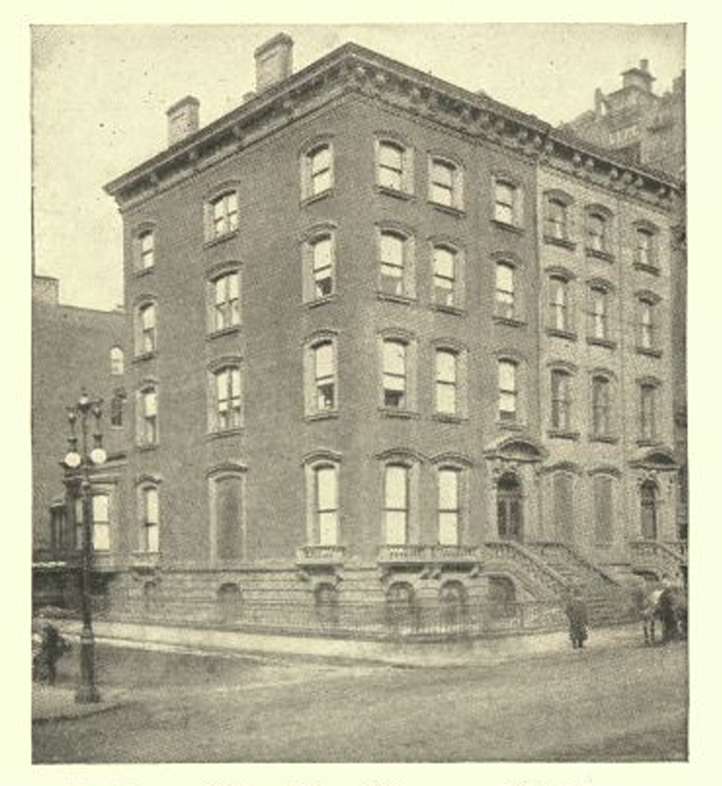
The next owner of this corner lot was Thomas Rigney, who purchased the land from Putman and built the brownstone townhouse at 320 Fifth Avenue, where the Bells would later live. (It was reported that Rigney’s house never sunk into the ground as Putnam had feared.) Rigney sold the home to Isaac Underhill Coles in 1861.
In 1877, Mary Bell purchased the brownstone home and rear stables at 3 West 32nd Street from the Coles’ heirs for a whopping $80,000. By this time, the house was in a very prestigious residential district of Manhattan, just one block south of the mansions of John and William Astor. Mary got a good deal.
Next door, at 322 Fifth Avenue, was the handsome townhouse of David Stewart, a banker, and his wife Mary. Following David’s death, his widow married artist Albert Bierstadt, a member of the second generation of the Hudson River School. Mr. and Mrs. Bierstadt continued living in the Fifth Avenue home until Albert died in 1902.
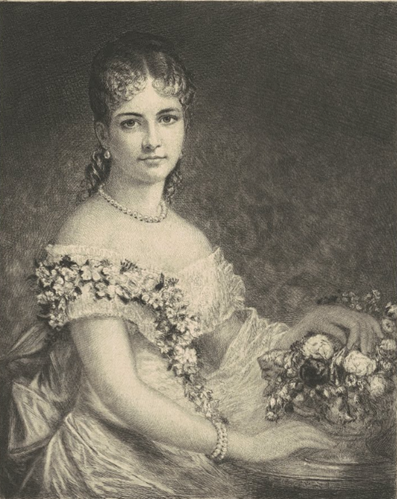
The most interesting homeowner on this block, at 324 Fifth Avenue, was Mrs. James Coleman Drayton (aka Charlotte Augusta Astor), the daughter of the late William Backhouse and Caroline Astor. Charlotte was only 20 years old and one of the most desirable débutantes of the Gilded Age when she was married to Drayton, a prominent lawyer, in 1879 (the grand wedding took place in the Astor mansion).
The marriage didn’t last long.
In 1890, the Draytons traveled to Europe with hopes of reconciling their differences. But by this time, it was known by all that Charlotte was spending a great deal of her time in London with Major Hallet Alsop Borrowe, an unemployed playboy who lived off his father’s wealth.
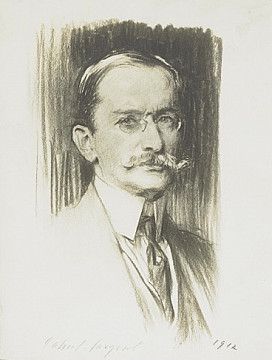
The very public affair didn’t go over well with Mr. Drayton or Mr. Astor.
In fact, Drayton challenged Borrowe to a duel; luckily some friends intervened and prevented this from happening. And Mr. Astor disinherited his daughter while leaving $850,000 in trust for her 3 children upon his death that year (her brother, John Jacob Astor IV, gave her $1 million to help her get by). The Draytons divorced in 1896.
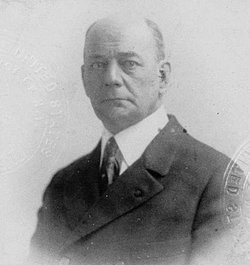
In 1900, the Bell’s 25-year-old son, Denniston M. Bell, was charged with arson for allegedly setting fire to several buildings, including a stable, near the family home in Newport, Rhode Island. Dr. Bell died in 1902, reportedly overcome by the grief his son’s actions and arrest had caused.
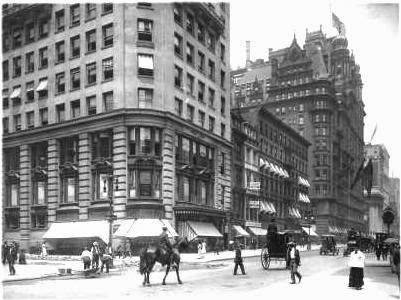
By now, the Astor mansions had been replaced with the Waldorf-Astoria Hotel, and many of the brownstone residences in the neighborhood had been converted into lofts or showrooms for business purposes.
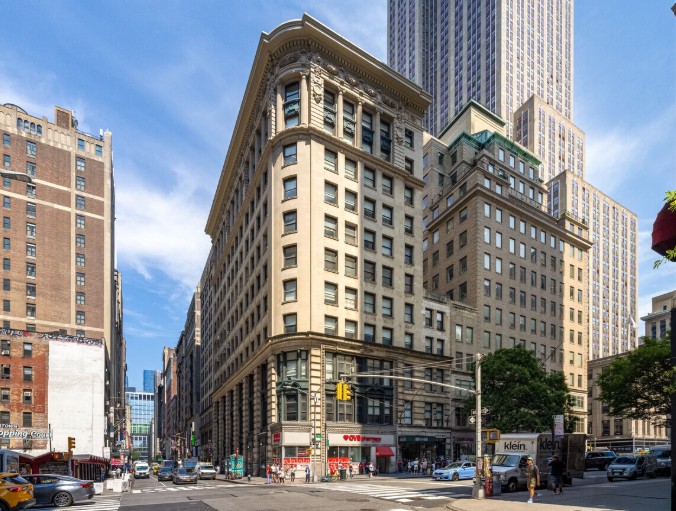
Knowing her time had come, Mary Bell purchased the Bierstadt house in 1903 for $400,000, bringing the total value of her land to about $1.25 million. She partnered with developer Henry Corn to construct an 11-story store, loft, and office building on the land that long ago was considered unbuildable.

The Midnight Band of Mercy seemed to have it right: compassion should always come before curiosity. That poor kitten deserved kindness more than attention.