
Hatching Cat of Gotham Author Events
By The Hatching CatVirtual Events, On-Site Presentations, Podcast Interviews, and Walking Tours

I am available for virtual author events and podcasts across the United States and for in-person presentations in the New York metropolitan region (including northern New Jersey and the Hudson Valley). If your organization or podcast is interested in hosting a program or interview, please contact me at hatchingcat@gmail.com.
I currently offer a variety of one-hour PowerPoint presentations; I can also develop a custom presentation based on your specific needs, including time limits or animal interests. All presentations are kid-friendly, but they are primarily geared for adult animal fans and history lovers.
I have done numerous author events and presentations for a variety of venues and podcasts, including the Center for Brooklyn History, Greater Astoria Historical Society, New York Adventure Club, South Street Seaport Museum, The City Reliquary Museum, Landmark West!, The Lambs Club, The Gilded Gentlemen, Cattitude (Pet Life Radio), and libraries throughout the region.
A Sampling of Available Presentations
New for the Christmas Season!
Jolly Old Gotham: How Animals Helped Shaped NYC’s Holiday Season
Christmas in New York has been immortalized as a festive wonderland in classic films like Elf, Home Alone, and Miracle on 34th Street. With theatrical holiday window displays, the iconic Christmas tree at Rockefeller Center, and seasonal traditions like the Rockettes at Radio City, the city can feel like a movie set filled with childhood nostalgia and old-fashion romance. But how did the Christmas season get its start in New York, and how did animals play—and continue to play—a large part in these traditions?
Take a virtual sleigh ride with author Peggy Gavan for a wondrous, animal-themed journey into the history of Christmas in New York, from Dutch colonial times to the Victorian era and later. This festive tour over the river and through the woods includes:
How Dutch traditions inspired Santa and his reindeer — from Sinterklaas and his white horse, Ozosnel, to the reindeers of Clement C. Moore’s “A Visit From Saint Nicholas”
A comical look at old animal balloons in the Macy’s Parade, and how a poor PR stunt caused two favorite feline balloons to have mid-air collisions with small planes
The most popular and macabre gifts of the Victorian era — both live and inanimate — including cats, talking dolls, and taxidermized animals dressed in Victorian garb
The live animals on display at Rockefeller Center — how reindeer, sea lions, and penguins created wonder and chaos during World War II
A peek behind the scenes at Radio City Music Hall — a day in the life of the camels, sheep, and donkey that star in the Live Nativity Scene
Maritime Cats of Gotham: Tales of Seafaring Cats of Old New York
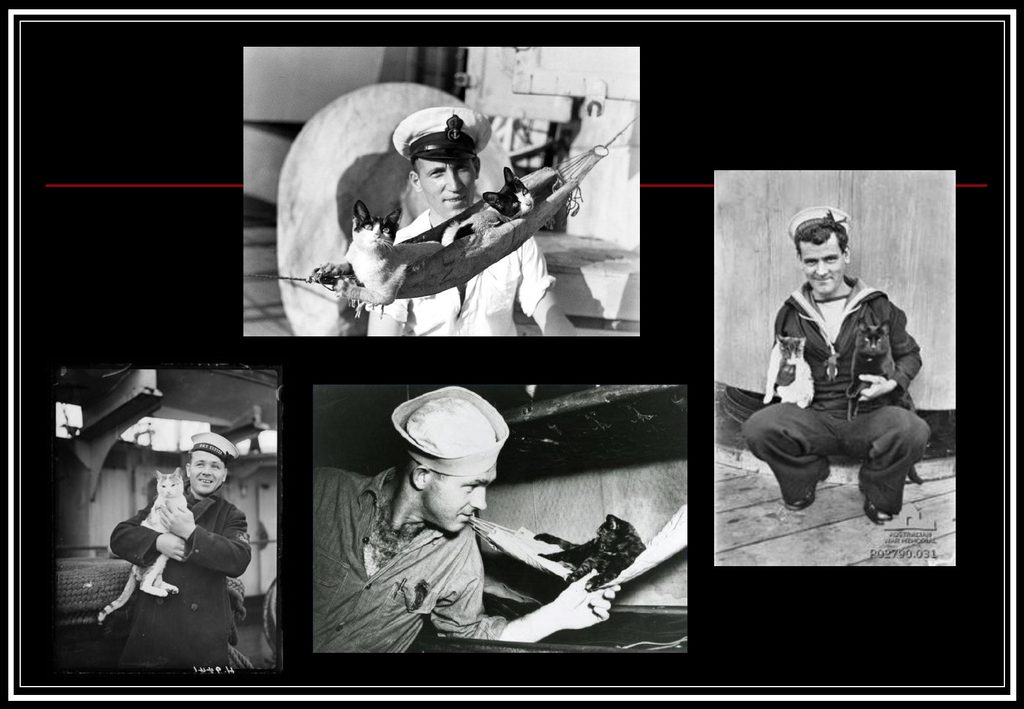
The special relationship between sailors and cats dates back thousands of years. Although maritime cats were primarily responsible for killing the rats that gnawed at the ship’s ropes and provisions, they also provided companionship and a sense of security for the men at sea. Seafaring felines were especially popular during wartime, when almost every ship had at least one cat. Many feline landlubbers also served as rat killers or comforting mascots at land-based maritime operations.
Join Peggy Gavan for an informative and unconventional dive into the maritime history of New York City from the late 1800s to the early 1900s through true tales of cats who lived at the city’s many piers or traveled to New York Harbor on the global steamships taking part in war efforts. This virtual look into the lives of seafaring cats and feline landlubbers includes the following and many more:
- The Working Cats of the Brooklyn Navy Yard — Discover the history of the navy yard, from its founding in 1806 to its role during wartime, through stories of the cats who were born and worked there.
- The Ship Cat Rescued at Eatons Neck — Many 19th-century shipwrecked sailors and cats owe their lives to the U.S. Life-Saving Service, which pre-dated the U.S. Coast Guard. At least one cat was even rescued by a breeches buoy!
- The Feline Mascot of the RMS Carpathia — To thank Captain Rostron and his men for saving hundreds of survivors of the Titanic, two Broadway stars presented him with a black kitten for good luck.
- The Mascot Cats of the Seamen’s Church Institute — The Seamen’s Church Institute, which began as floating churches for sailors in the early 1800s, had numerous cats that served on land and at sea.
- The Refugee Pirate Cats of Chelsea Piers — During the Great Wars, hundreds of ship cats were left stranded at Chelsea Piers when their ships inadvertently departed without them. The reason the ships left them behind may surprise you!
Cats and Cat Men of Gotham: Famous Feline Mascots of Gotham
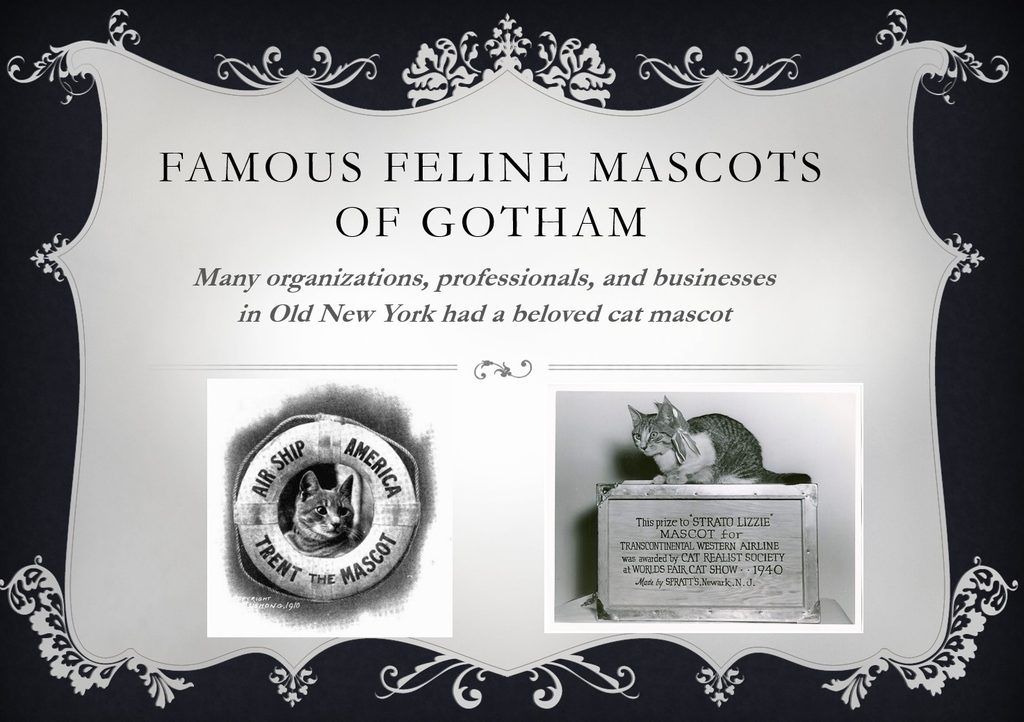
The 19th century was a rough time to be a stray cat in New York City. Not only were thousands of homeless cats sent to the ASPCA gas chambers or disposed of in gutters and rivers, but they also faced danger in the form of callous children, misguided citizens, and heartless entrepreneurs on a daily basis. But many lucky cats were rescued by a diverse array of men—including firemen, hotel managers, athletes, and politicians—who saved them from the dangerous streets and welcomed them into their homes and hearts as champion mousers, inspirational muses, and good-luck mascots.
Join Peggy Gavan for a captivating tour of the history of New York City from the late 1800s to the early 1900s through true tales of extraordinary cats whose turn of fortune was simply a matter of being in the right place—or the wrong place—at the right time. This virtual look into the lives of the courageous and curious cats who left their mark on the history of New York includes the following and more:
- The Flying Feline Mascot of TWA — Discover the history of the land that lies under LaGuardia Airport while hearing about a cat who flew 100,000 miles with TWA pilots
- The Famous Cats of the Algonquin Hotel — The midtown hotel made famous by the Algonquin Round Table of writers and actors has had a feline mascot for 100 years
- The Feline Angler of Dyker Meadows Golf Club — Explore the history of Dyker Meadows in Brooklyn through the story of a beloved cat mascot who loved to go fishing
- The Great Lover of 44th Street — Tommy Casanova Lamb, the tough feline mascot of New York’s Lambs Club, was the only member allowed to bring his “wives” into the clubhouse
- The Feline Mascots of the New York Rangers — The members of New York’s professional hockey team swear that their black cat helped them win the Stanley Cup in 1928
- The Cats of City Hall — New York’s City Hall had numerous mascot cats, including a cat named Tammany who received a pardon under Mayor LaGuardia
Femme Fatales and the Myth of the Crazy Cat Lady
Throughout history, there has always been a complex connection between felines and females. Women with cats have been associated with spinsterhood, widowhood, mental illness, feminism, and even witchcraft. Although the term “cat lady” is accepted today to describe a woman who loves cats or lives with multiple cats, the “crazy cat lady” stereotype originated from medieval superstitions linking independent ladies and their kitties to deviance and witchcraft. By the 20th century, the term had evolved into a derogatory cliché for lonely, unmarried women.
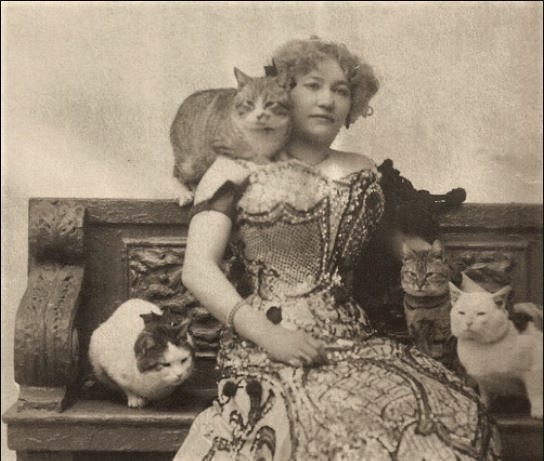
Step back in time with author Peggy Gavan as we explore the societal conditions that created the “crazy cat lady” stereotype and share empowering stories of cat lovers who helped shape women’s history. An ideal presentation for Women’s History Month, with stories such as:
- The Cat Fight at the Windermere Apartments — Not only did the women of the Windermere defy societal norms, but they also had no fear going to battle for their cats
- The Bohemian Cats of Jessie Tarbox Beals — The first female photojournalist in America used her camera to capture the ladies and cats of Greenwich Village
- The Gentleman Cat of Mary Louise Booth — The highest paid career woman in the United States doted on her upper-class cat, General Muff
- The Curious Case of a Starlet’s Blue Cats — An aspiring Broadway star set a new fashion trend when she dyed her white Angora cats blue
- The Cat Hoarder of the Lower East Side — A widower living in a 17th-century ramshackle house spent most of her earnings on her many cats
- The Heiress Who Bequeathed Her Estate to Cats — When Caroline Ewen died in 1913, she bestowed all but $500 to homeless felines
The Bravest Pets of Gotham: Four-Legged Firefighters of Old New York
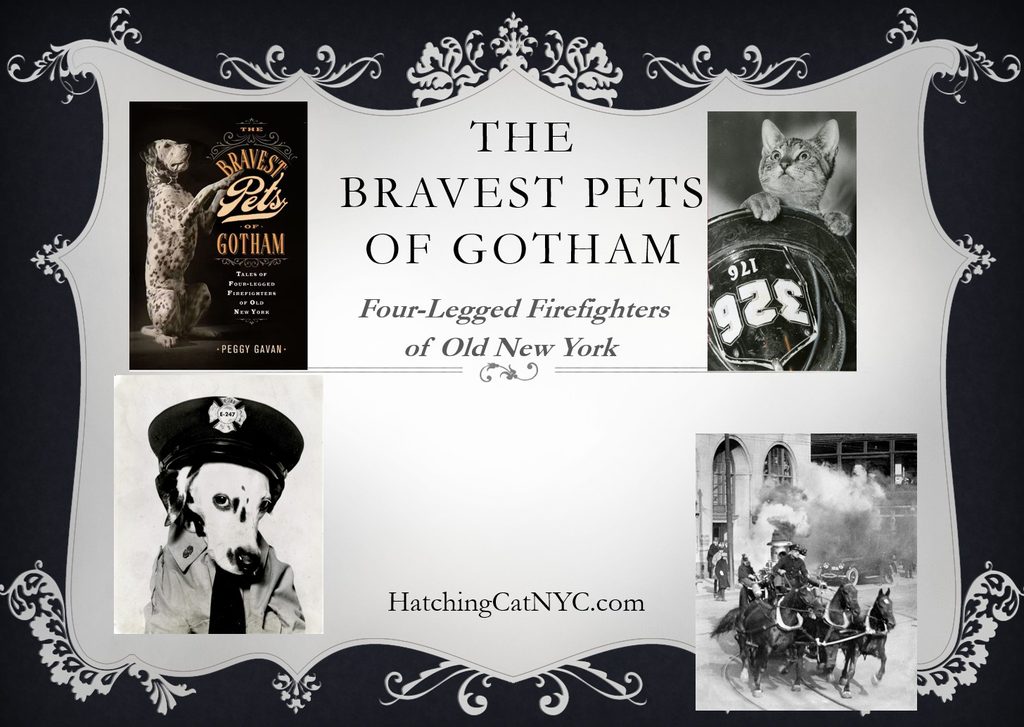
In twentieth-century Gotham, the FDNY permitted firemen to keep one dog, one cat, or multiple singing birds in their firehouse. Most if not all fire companies broke these rules, keeping multiple pets that served as good-luck mascots and companions. These pets, along with the horses that pulled the apparatus, provided companionship for the men, who were required to live at their firehouses for extended periods of time with only a few hours off for dinner breaks.
As FDNY Secretary Alfred Michael Downes wrote in 1907, “A gentler phase of the fireman’s life is shown in their devotion to their horses and pets. Dogs, cats, and even monkeys are adopted in the fire-houses, and share the affections of the men with the horses.”
Travel back in time to New York City’s horse-drawn era to discover the amazing four-legged firefighters who served the FDNY as a working partner, good-luck charm, comforting companion, or lifesaving hero. You’ll meet life-saving fire horses and dogs, fire cats that could slide down the fire poles better than the firemen, a monkey who saved her own firehouse from burning down, and many other amazing true tales.
The Dog Days of Gotham: Pampered Pooches of Old New York
From jewel-studded collars to private bathhouses, the dogs of Gilded Age New York lived lives as varied as the city itself. While most strays scavenged for scraps on the streets, their purebred counterparts lounged in luxury at hotels, parlors, and even their own cemeteries. Get ready to step into the world of these pampered pooches and discover how they shaped the city’s social fabric in surprising ways.
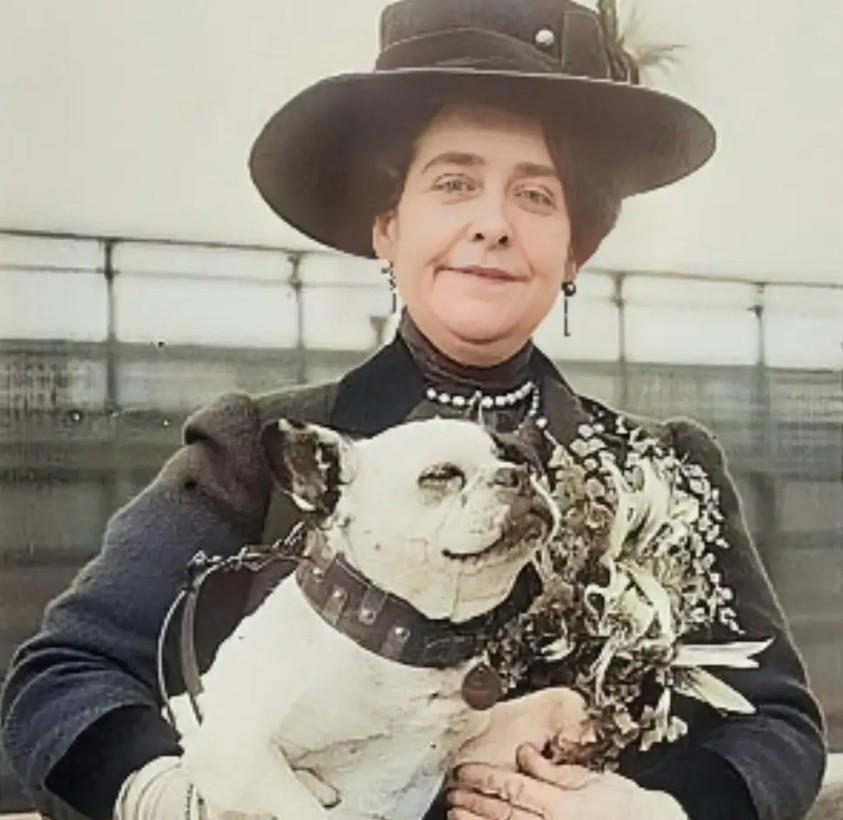
Journey back to the 1800s and early 1900s to explore a period when pampered pups trotted alongside Gotham’s elite, helping to shape a new culture of canine care, companionship, and indulgence. This unique virtual experience features:
- The Plaza Hotel’s Canine Guests — a look at why its pampered pooches, including the legendary Pinky Panky Poo, made it a haven for dogs starting in 1907
- Crispin’s Chrispian of Cobble Court — the charming tale of the Kerry blue terrier who inspired Margaret Wise Brown’s final picture book
- America’s Oldest Pet Cemetery — an exploration of the terrier who became the very first dog to be laid to rest there
- New York’s First Professional Dog Walker — an introduction to the young woman who launched this entirely new profession in 1899
- The Bathhouse for Pampered Pups of Harlem — the story of how a rat catcher by trade turned canine care into a novel business
The Weird Wendels and the Million Dollar Dog Yard
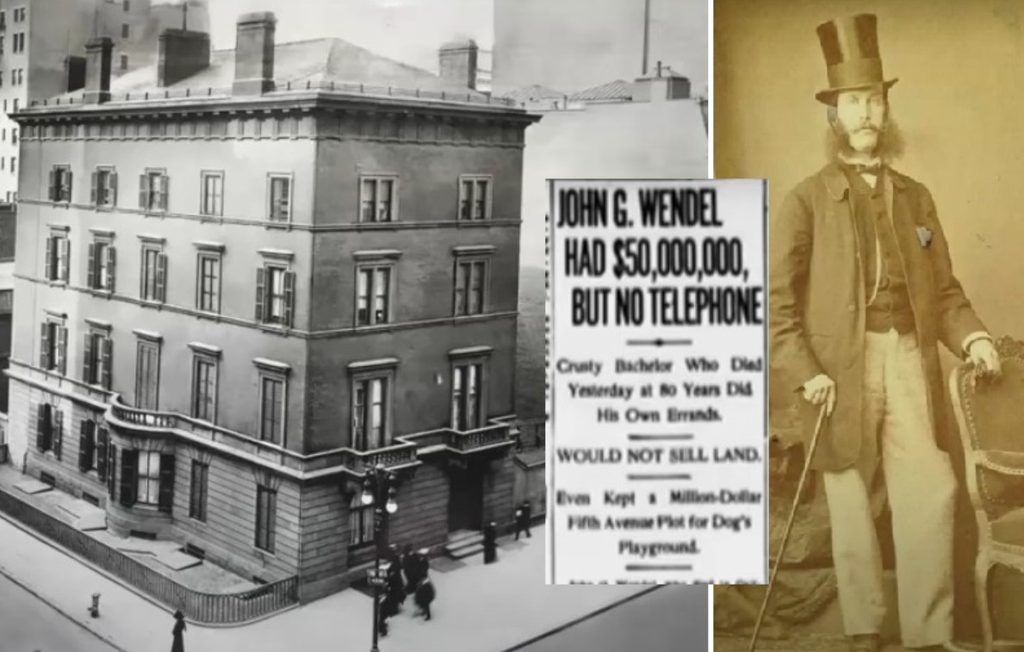
The Wendel family had made a fortune in New York real estate, but as the Gilded Age came to an end, this once fabulous and famous family turned against itself and became mired in gossip and intrigue. Asylums, infidelities, recluses: Who were the people whom the New York press dubbed “the weird Wendels”?
According to legend, when New York City millionaire Ella Wendel passed away in her Fifth Avenue mansion in 1931, she left her entire estate – valued at about $30 million — to her French poodle, Toby. This large inheritance, which was reportedly passed on to generations of poodles named Toby, made the Wendel dog and all his heirs the richest dogs in the world. The story of Toby’s inheritance is a great story to tell, but sadly, it’s only a tall tale. The story of Ella Wendel, however, is extraordinary. Actually, it’s right out of the pages of Charles Dickens’ Great Expectations.
Walking Tours
I am also a licensed New York City tour guide and co-owner of Cats About Town Walking Tours for Cat Lovers. Our walking tours offer a unique lens on NYC’s rich history, told through the lives of its feline residents. Each stop is a blend of fascinating history and endearing cat tales, making for an unforgettable journey through the city’s streets. We offer three tours, each about 2 miles and 2 hours long:
* Brooklyn Heights
* Financial District, Manhattan
* Lower East Side/Bowery, Manhattan
Private tours for parties, events, and groups are also available.
Testimonials
Thoroughly entertaining romp!
I can honestly say this is the best virtual presentation we’ve ever had.Fascinating stories! I like the way you relayed these to history!
So entertaining and enjoyable!
Thanks so much — it was purr-fect!
So awesome! I’m calling my next cat Lord Haggis!
This is such a good show. Thank you! I’m loving it!
Wonderful — meow!
This is a lot of fun!!!
This is such a good show. Thank you! I’m loving it!
Thank you once again for the great program! It was an enjoyable, and very interesting presentation. We all love pet stories, especially about heroic pets.