Cow Hunter's Point
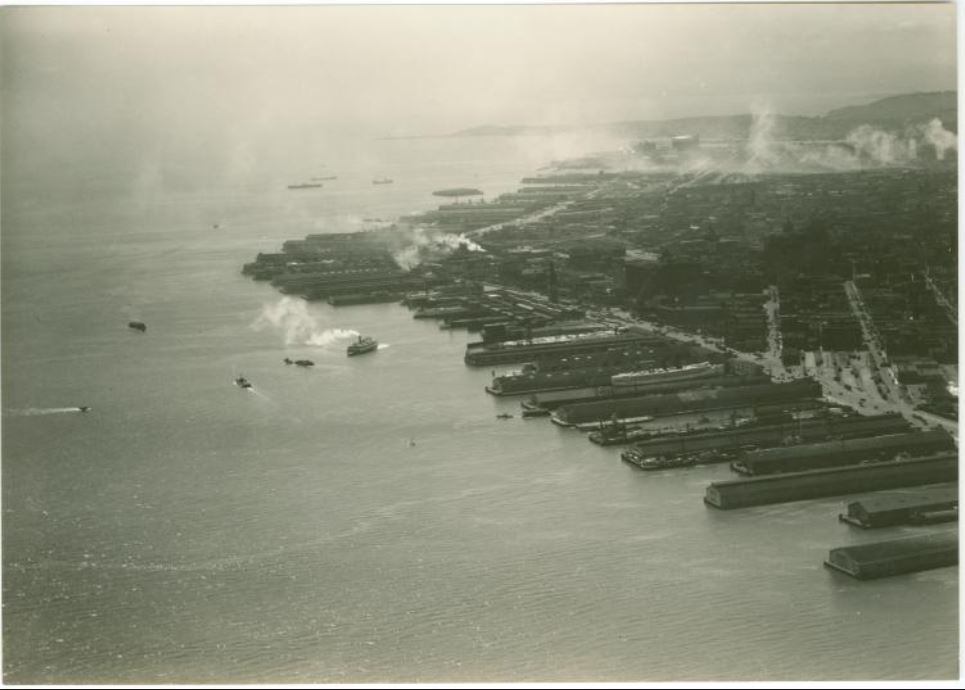
This photo (circa about 1900) shows the view of Hunter’s Point in Long Island City from Sunnyside, Queens, which is just across from Greenpoint on the north side of the Newtown Creek. Photo from the book "300 Years of Long Island City"
This photo (circa about 1900) shows the view of Hunter’s Point in Long Island City from Sunnyside, Queens, which is just across from Greenpoint on the north side of the Newtown Creek. Photo from the book “300 Years of Long Island City”

Part I of a Brooklyn Cow Tale

Some suggest that animals have a greater sense of imminent danger than people do. Did the Greenpoint cow in this true New York story have a sixth sense that allowed her to predict her sorrowful future, and thus, take action to try to prevent the final outcome?

The story begins on November 30, 1901, in Greenpoint, the northernmost neighborhood of Brooklyn. Although the town had already become more industrial by this time — with rope factories, glass works, lumber yards and maritime industries lining the East River and Newtown Creek — the interior section of the Greenpoint peninsula still had its share of stables and cows in the early 1900s.

On this particular morning, Patrick McCarthy was leading a cow from her bucolic home in Greenpoint to Eastman’s slaughter house on 11th Avenue at 59th Street in Manhattan. The first part of the trip, from a stroll through Greenpoint streets, over the swing bridge connecting Manhattan Avenue to Vernon Boulevard in Long Island City, across the six tracks of the busy Long Island Railroad, and then down Borden Avenue to the Hunt’s Point Ferry, was seemingly peaceful. Published reports even note that the cow seemed to enjoy the ferry ride to East 34th Street in Manhattan.

The Hunter’s Point ferry terminal (far was made obsolete by the Queensboro Bridge and rail tunnels under the East River. It closed in 1925.

But trouble began when man and bovine reached the corner of 34th and Fifth Avenue…

The Manhattan Avenue Swing Bridge

The bridge that Patrick McCarthy and his Greenpoint cow crossed in 1901 was a 168-foot wrought iron and wood high-truss swing bridge built by the King Iron Bridge and Manufacturing Company in 1880. By 1895, the archaic movable bridge, which was rusting and rotting, was the only one of its size and importance that was operated manually.

According to The New York Times, “three stalwart men and an old army veteran” used an upright iron rod and two oak bars, each about nine feet long, to open and close the bridge. The men would walk in a circle nine times to open or close it, which took about seven minutes.

The bridge was opened about 140 times a day, so each man walked about 11 miles a day. Although an electric motor was installed at one point, it failed the first time it was used.

In 1894, the United States War Department gave Kings and Queens counties an order to take action regarding the structure of a new bridge. For two years the War Department threatened to demolish the bridge unless it was replaced with a more modern structure. The new bridge, called the Vernon Avenue Bridge, was finally opened October 18, 1905, for pedestrian and trolley traffic.

The Vernon Avenue Bridge around 1930. Queens Public Library
Vernon Avenue Bridge around 1930. Queens Public Library

Unfortunately, as early as 1916 there were complaints that the safety of the bridge was being compromised by the heavy truck and car traffic it was carrying. The bridge was rebuilt several times over the years, and was finally removed in 1954 when the nearby $11 million Pulaski Bridge opened.

This bridge was also to be called the Vernon Avenue Bridge, but in recognition of the large Polish-American population in Greenpoint, it was named for the Polish patriot Casimir Pulaski, who fought and died in the Revolutionary War.

Recently, the non-profit Brooklyn Greenway Initiative proposed a Pedestrian/Bicycle Bridge Study Project to give people an alternate route for crossing the Newtown Creek between Manhattan Avenue and Vernon Boulevard. The study is part of a large capital project to implement a 14-mile Brooklyn waterfront greenway stretching from Newtown Creek to Owl’s Head Park in Bay Ridge.

The Trouble on Fifth Avenue

Now back our story…


With a loud Moo-oo, Patrick McCarthy’s cow broke from her halter and started to run. “Stop her!” Patrick cried. “Head her off!” he shouted while dodging pedestrians and horse-drawn carriages.

The Greenpoint cow charged at Patrick, turned onto Fifth Avenue, and ran a zig-zag course until ramming her head through the side door of a horse-drawn cab in front of the Waldorf-Astoria.

According to the tale, William Mackey, an actor, was in the cab in front of the hotel when the cow decided to “hail” the same cab. William was reading the newspaper when he heard a crash and saw the cow’s small horns protrude through the door. He quickly moved over the other door, yelling, “Help! Help!” while jumping out of the cab.

Patrick Darcy, the cab driver, jumped down from the box and excitedly tugged at the cow’s tail in an effort to save his cab from being demolished. Darcy should have known it’s not such a good idea to pull a cow’s tail: This action only made her ram her head further into the cab and destroy it even more.

There were several cabs and carriages in front of the Waldorf-Astoria at the time, and a few of the coachmen and footmen came to Darcy’s assistance after leading their own teams out of danger. Some police officers also tried to help, but everyone’s efforts were all for naught.

Patrick McCarthy was finally able to get inside the cab and tap the end of his whip on the cow’s nose, causing her to back out of the wrecked cab. Unfortunately for both the cow and the driver, this story does not have a happy ending: The Greenpoint cow eventually made it to the slaughter-house, and Darcy’s cab was totaled.

If you enjoyed this story, you may also like When the Waldorf-Astoria Went to the Dogs.

Part I of a Parkville Precinct Puppy Tale

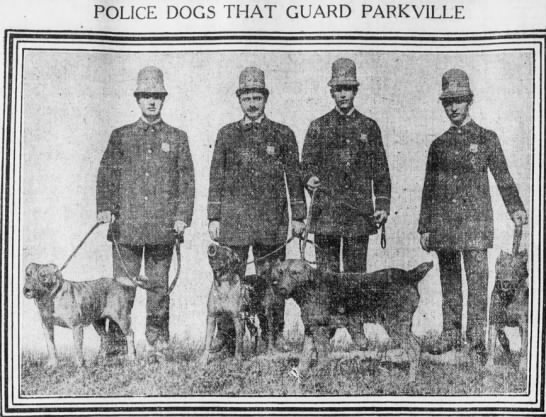
Parkville Police with their dogs, July 17, 1910

In 1907 the Police Department of the City of New York, under the command of Police Commissioner Theodore Bingham, sent Inspector George R. Wakefield to Paris and Ghent, Belgium, to look into acquiring some police dogs. Police dogs had been gaining popularity in Europe since their first introduction in Ghent in the late 1800s, and many periodicals were touting the benefits of adding dogs to police forces in rural areas.

A Parkville police officer with New York Police Department second-generation police dogs Rap and Nogi, around 1915.

Inspector Wakefield was most impressed with the dogs in Ghent, who were trained to trust only men in uniform – and to distrust any man lying down or crouching. In order to test them out, he donned a Ghent patrol uniform and walked the streets of the city at night with a dog. Wakefield brought back five young Belgian sheepdogs, each about a year old. The five pups — Jim, Nogi, Lady, Donna, and Max — made up the first genuine canine squad in New York City and, in fact, all of America.*

The total cost of the trip and acquisition was $364.84, which included $50 for all five dogs; $132 for fare to and from Belgium; $48 for board; $3 for cabs; $25.60 for incidental expenses incurred while looking for the dogs; $6.60 for three crates; $50 for freight; $10 for duty; and $2.65 for a book on training police dogs. Herman A. Metz, Controller of the City of New York, said Wakefield’s trip was the cheapest of its kind on record. Even the customs inspectors questioned the paperwork, believing the dogs should have cost $1,000 each.

“Men in uniforms are friends – all others are possible enemies”

Prior to coming to Parkville, the sheepdogs were trained in Ghent to “catch vagrants and escaping marauders.”
Prior to coming to Parkville, the sheepdogs were trained in Ghent to “catch vagrants and escaping marauders.” 

Upon arriving in New York, the dogs were placed in the department’s kennels near Fort Washington Point, at the intersection of Riverside Drive and Depot Lane (aka, Road to Depot; today’s W. 177th Street). Under Inspector Wakefield’s direction, the five canines received about three months of special training.

According to Walter A. Dyer, author of A Police Dog in America (1915), the dogs were trained to obey fundamental commands and to recognize men in uniforms as friends (and all others as possible enemies), to answer at once to the police whistle or the rap of the stick, to hurl themselves upon someone attacking a policeman, to pursue and throw a fleeing criminal, to search around buildings at night, and to signal bark in of the presence of persons lurking in the shadows.

The original kennels were on the property of the old 42nd Police Precinct on Depot Road (W. 177th Street) and Riverside Drive. (Photo, 1923) 

The police pups arrive in Parkville

Following their intense training, the five canines were declared fit for service in January 1908 and placed in the 72nd Precinct in Parkville, Brooklyn. The residential village on the west side of Flatbush had been the scene of numerous night burglaries; hence, the Police Department chose Parkville to experiment with the new canine patrol. One patrolman was placed in charge of the care and feeding of the dogs, and each dog was assigned to one of five policemen who were chosen because of their love for dogs and their interest in the work.

The Parkville police built a one-story frame building with 24 kennels on a 125x75-foot lot near the intersection of present-day Foster Avenue and Ocean Parkway;
16 outdoor kennels with runways were available during good weather.
The Parkville police built a one-story frame building with 24 kennels on a 125×75-foot lot near the intersection of present-day Foster Avenue and Ocean Parkway;
16 outdoor kennels with runways were available during good weather.  

The two-legged and four-legged partners teamed up for duty every nght from 11 p.m. to 6 a.m. The men would keep the dogs on leash going to and from their posts and then release the dogs once on patrol so they could check out the back of each property for marauders or thieves. The dogs often put in 25 or 30 miles during each seven-hour shift as they ran across fields and investigated the countryside of Parkville, Brooklyn.

Burglaries, hold-ups, and other crimes after 11 p.m. were reduced by about 50 percent in the bucolic neighborhood of Parkville after police dogs joined the force. (Webster Ave., 1905.)

Max to the rescue

During their first few days at the Parkville police station, the police dogs were kept on a leash at all times. On January 29, 1908, the leashes were put away on post and the dogs went to work. Thanks to this freedom, Max was able to make an incredible rescue and save a man he found freezing in the snow.

At about 8 p.m. that night, the officers heard a scratching on the station house door. Max bounded inside, ran past several plain-clothed officers, and headed to Lt. Frank Kelly. He began dragging Kelly by his coat to the door, which caught the attention of Acting Captain William H. Funston.

Parkville Police 70th Precinct
The “Parkville Police,” once reportedly located in the area of Ocean Parkway and Foster Avenue, is now the 70th Precinct at 154 Lawrence Ave. The 3-story building was constructed in 1933.

The captain, who was in plain clothes, tried to coax the dog outside, but Max refused to follow – the captain could have been an enemy, after all. Max did agree to leave with Officer Scally, who was in uniform, and once he was assured the men were following him, he bounded out of the station and started to run.

Max led the officers from the station at Ocean Parkway near Foster Avenue to a vacant lot at 37th Street and 15th Avenue, nearly a mile away. He waited for the officers to catch up, and then led them behind a snow bank, where they found a man half frozen and unconscious. The man was taken to the station in a patrol wagon and received medical treatment. He said he was Edward Connolly, a cook on the steamboat Robert M. Doyle, and had been drinking before he went into the lot. Mr. Connolly was locked up and charged with intoxication.

Following the rescue, Lt.Wakefield told the press, “Max was the most intelligent dog of the bunch.”

Now here’s the question: Was Max really smart enough to lead the officers to Edward Connolly because he knew the man was in trouble, or did he think the man was someone bad because he was lying down? Stay tuned for my next amazing rescue tale starring Max — it may lead you to believe that Max was very intuitive.

From Greenfield to Parkville

From 1851 to 1852, the United Freeman’s Association purchased the John Ditmas and Johnson Tredwell family farms in the Greenfield section of Flatbush – a total of 114 acres – for about $57,000. In 1853 the Association laid out a system of streets that intersect Brooklyn’s north-south street grid diagonally (which are still present today), making the village, with its detached frame houses, one of the most attractive suburbs in Brooklyn.

In 1871 the name of the village changed to Parkville; completion of the northern section of Ocean Parkway in 1875 further spurred the neighborhood’s development.

The village of Parkville followed a diagonal grid pattern. E. Robinson’s Atlas of Kings County, N.Y. New York: 1890.

Rural Parkville goes urban

Although there were numerous vacant lots at the intersection of 37th Street and 15th Avenue around the turn of the 20th century – including a few large lots next to what was then the Flatbush Corporation Building — a 1917 map shows that much of the area was fully developed by this time. The fields, farms, dirt paths, and frame homes and stables belonging to prominent land owners like R. Hegeman, Colonel Joseph G. Story, and George Martense – all of which appear on an 1890 map of the same intersection – had been replaced by brick, concrete, asphalt, and industry.

If you enjoyed this story, you may want to read about the Parkville Police Dogs’ Debut at Madison Square Garden in Part II of the Parkville Precinct Puppy Tales or about the additional police dogs obtained following a jewel heist in 1908.

*Except for tentative experiments made in Poughkeepsie, N.Y., New Haven, Conn., and Glen Ridge, N.J., New York was the first American municipality that made a fair test of a dog squad as a part of its police force.

Chelmsford dog kennels

Once upon a time, there was a cat and dog boarding house nestled in the thick woods near 49th Street and 10th Avenue, in what was then the town of New Utrecht, Brooklyn, in Kings County, New York.

The kennels, advertised as the Chelmsford Stock Farm, were just a stone’s throw from Fort Hamilton Avenue (renamed Fort Hamilton Parkway in 1910), and only a few minutes’ walk from the “thickly settled” section of Borough Park. An article in the Brooklyn Daily Eagle coined the New Utrecht kennels a “Farm for City-Bred Cats” whose wealthy owners spend summers at the seashore.

The proprietor of the kennels was Frederick Webster, who owned a large, rhomboid-shaped, fenced-in lot along 10th Avenue from 49th to 51st streets. Webster operated the main branch of his Open Air Carpet Cleaning establishment on the site, and he also boarded horses in stables on the property. An 1890 Kings County map published by E. Robinson shows 11 dwellings on the property, including the carpet cleaning buildings and stables.

In the summer of 1899, 22 cats and 45 dogs were summering at Chelmsford Farm. They were all under the care of John Hughes, who had been a superintendent at the boarding facility for many years.

One of John’s most valuable assistants was a small gray and white cat, who had wandered onto the property one day and immediately made friends with all the animals. Called Plain Bill, the feline assistant proved his worth by roaming the grounds and keeping unwanted intruders away from the cages.

Chelmsford Stock Farm cat and dog

On August 19, 1899, a reporter from the Brooklyn Daily Eagle visited the New Utrecht kennels to check out some of the “fine feline specimens” who were boarding there, unbeknownst to most of the nearby residents and patrons on Fort Hamilton Ave. The reporter was quite pleasantly surprised by the “remarkably clean condition” and the impressive manners of the cats “who have been taught to behave themselves and to keep perfectly quiet.”

As the reporter described it, the dog kennels were located on one edge of the woods, and consisted of a house and a fenced-in area with a little door that allowed the dogs to go back and forth along an outdoor promenade. The cat kennels were located some distance from the dogs, and featured a large building with spacious cages for each feline boarder. The cats got exercise every morning and were allowed to sunbathe outdoors for a few hours each day.

Fred Webster was quite the entrepreneur: In addition to the Chelmsford Kennels at New Utrecht, he was president of the Open Air Carpet Cleaning Company (pictured here at Clinton and Degraw streets), and, along with his brother, Charles, he operated the Clinton Renovating Company, Good Care Storage Company, and Chelmsford Storage and Van Company.

On the day of his visit, several cats greeted the reporter, including Barney, belonging to Miss Cochrane of 71 Hancock Street; Dewey, a maltese owned by police captain Charles H. Bedell of the Fourth Precinct; Billy, a large maltese who resided at 630 Flatbush Avenue with Mrs. William Moore; and Teddy, belonging to Samuel Redfern of 381 Weirfield Street.

St. Clair McKelway Brooklyn Daily Eagle
Isn’t it amazing that St. Clair McKelway (pictured here), editor-in-chief of the Brooklyn Daily Eagle from 1884 to 1915, did not think it odd or dangerous to publish the names and addresses of wealthy and well-known residents on vacation?

“Send Your Valuable Dogs to Chelmsford”

In a May 1891 ad for his kennels at New Utrecht, Frederick Webster invited people to send their “valuable dogs” to the Chelmsford Stock Farm before going to the country. The short classified ad stated the dogs would receive the best of care and be exercised every day. One such valuable dog that took advantage of the invitation was Lord Wilton, a prize-winning St. Bernard belonging to Mrs. Alexander Mackenzie Hughes of Amity Street, Brooklyn.

Lord Wilton, who in 1899 was listed as the oldest St. Bernard in the United States, was one of many of the St. Bernards exhibited by the New York St. Bernard Kennels, which were owned by New York newspaper mogul William C. Reick.

During the summer of 1895, Frederick Webster ran several ads announcing that the American Kennel Club stud was spending the summer at Chelmsford Farm.

Frederick Webster and the Knickerbocker Field Club

Fred Webster, the son of Michael and Mary Webster, was born in England on June 7, 1852, and arrived in New York in 1854. In 1879, Fred married Henrietta S. Merill, and the two resided at 359 Clinton Street in the Cobble Hill section of Brooklyn, which was also the official address for the offices of M. Webster’s Sons (shown above).

Knickerbocker Field Club Flatbush
The 1893 clapboard clubhouse for the Knickerbocker Field Club of Flatbush was damaged by an arson fire in 1988 and razed in 1992 with the approval of the Landmark Preservation Commission due to lack of funds for restoration.

Fred was a very active member of the community, and was one of several prominent tennis enthusiasts who founded the Knickerbocker Field Club of Flatbush in the winter of 1889. The club was located just west of Tennis Court (love that street name!), between East 18th Street and the Brighton Beach Line of the Brooklyn, Flatbush and Coney Island Railway.

It featured six outdoor courts (plus room for three more), a small structure that served as a clubhouse, and a bowling alley behind the service lines. In 1893, a two-story clubhouse was constructed, which featured an auditorium/gymnasium and library on the main floor, director’s room and billiards room upstairs, and four bowling lanes in the basement.

Knickerbocker Field Club bowling team 1905
Fred Webster was a member of the Knickerbocker Field Club inter-club bowling league. Perhaps he is one of the men shown here in this photo of the club’s 1905 bowling team (he would have been about 53 years old). Brooklyn Public Library

Although he was still advertising his kennels at New Utrecht in 1901, by 1910 Fred was living at 101 Hillside Avenue in Glen Ridge, New Jersey. Sometime between then and 1920 he passed away: The 1920 census lists his wife as a widow who was living with their daughter, Edna.

Today, where the Chelmsford kennels and farmland once existed, are brick apartment buildings, commercial buildings, and densely packed row houses.

The Knickerbocker Field Club (or The Knick) is still in operation on East 18th Street — unbeknownst to many neighborhood visitors, but not because of thick trees: Nowadays, the outdoor tennis courts are almost completely obscured by apartment buildings and the Brighton BMT line.

49th Street today
The Chelmsford Kennels were located at about this location, 951 49th Street, on the right.
Knickerbocker Field Club tennis courts.
An aerial view of the Knickerbocker Field Club tennis courts in Flatbush (bottom left).
What Happened to Pets and Other Animals on the Titanic in 1912? | HubPages

On April 15, 1912, the Titanic sank off the coast of Newfoundland. Of the 2,228 passengers and crew members who had set sail across the Atlantic Ocean to New York, we know that only 705 survived.

What many may not know is that several roosters, hens, and chicks were also making the journey on the ship’s maiden voyage. They never reached their new home in Briarcliff Manor, New York.

In April 1912, Mrs. Ella Bertha Holmes White and her good friend, Marie Grice Young, traveled to England and France, where they had purchased some prized French roosters and hens for the farm at Ella’s summer home at Briarcliff Lodge. Together with Ella’s maid, Amelia “Nellie” Bissette, and her manservant, Sante Righini, the two women boarded the Titanic at Cherbourg on April 10. The women’s ticket was No. PC 17760, and they shared first-class cabin C-32.

Ella Bertha Holmes White, Titanic passenger
Ella Bertha Holmes White

Fifty-five year old Ella White, the wealthy widow of Manhattan businessman John Stuart White, was short and stout with a brash personality. It was reported that she was quite out of shape, which is why she required the assistance of a maid and a manservant.

Tall, soft-spoken and 36 years old, Marie Young was Ella’s opposite. However, the pair was inseparable. The women had been sharing an apartment at Briarcliff Lodge in Westchester County, New York, and often traveled abroad together, collecting art and Russian and Asian antiques.

As the story goes, while boarding the Titanic on April 10, Ella had fallen and twisted her ankle. She was placed under the care of the ship’s doctor, who confined her to her cabin. This left Maria in charge of the roosters and hens, who were being housed near the ship’s galleys on the D deck.

Each day, John Hutchinson, the Titanic’s 26-year-old carpenter, would take Maria below to check on the chickens. (John was also responsible for the welfare of the 9 dogs in the ship’s kennels.) The hens continued to lay eggs in their new surroundings, and Maria would report the day’s count to Ella.

Marie Grice Young, Titanic passenger
Marie Grice Young

As a reward for his kindness, and for having extra crates and labels made for the chickens, Maria tipped John with some gold coins. “It’s such good luck to receive gold on a first voyage,” John reportedly told Maria.

The Fateful Night

Just before the Titanic struck the iceberg, Ella was sitting in her bed and was just about to turn out the light to go to sleep. In her testimony, Ella said that it felt as if the ship were going over about a thousand marbles when it struck the iceberg.

She said they heard no alarms whatsoever. Ella put on several layers of warm clothes, and instructed Marie to do the same. Then they locked their trunks and the two women, along with the maid, Nellie, made it to the top deck via the elevator (although Ella had a walking cane, she still could not climb the stairs.)

Once on deck, Ella, Marie, and Nellie boarded lifeboat #8 on the ship’s port side. This lifeboat was one of the first to leave the ship, despite the fact that it appeared to be more than half empty.

Ella Bertha Holmes White and her good friend, Marie Grice Young. Titanic survivors
Pictured left to right are Marie, Ella, and Ella’s niece, Mrs Harry S. Durand.
Credit: © Michael A. Findlay / Harry Durand Jr., USA

Although Ella was unable to row with the others, she did contribute by using her cane — which had an electric light in the tip — to try to signal a ship whose lights could be seen nearby. In her testimony at the American Inquiry into the Titanic’s sinking, Ella spared no criticism for the crew in her lifeboat, whom she said were inept and rude. She also said that the Titanic had broken in two before sinking.

“Before we cut loose from the ship two of the seamen with us … took out cigarettes and lighted them on an occasion like that! … All of those men escaped under the pretense of being oarsmen. The man who rowed me took his oar and rowed all over the boat, in every direction. I said to him, ‘Why don’t you put the oar in the oarlock?’ He said, ‘Do you put it in that hole?’ I said ‘Certainly.’ He said, ‘I never had an oar in my hand before.'”

I spoke to the other man and he said, ‘I have never had an oar in my hand before, but I think I can row.’ Those were the men that we were put to sea with at night — with all these magnificent fellows left on board, who would have been such a protection to us. Those were the kind of men with whom we were put out to sea that night. Our head seaman would give an order and those men who knew nothing about the handling of a boat would say, ‘If you don’t stop talking through that hole in your face there will be one less in the boat.'”

This untransmitted telegraph from Ella to her father, E.T. Holmes, reports that she had been saved by the Carpathia. Many of the telegrams written on the Carpathia were unable to be transmitted due to the volume of requests.

Ella Holmes White

Ella Holmes was born in Massachusetts on December 18, 1856. She was the daughter of Edwin T. Holmes and Eliza Ann Richardson Holmes. She was also the great-great granddaughter of Lieutenant Elijah Stearns of Massachusetts, who was in the Massachusetts militia at the Battle of Bunker Hill; Ella was thus a member of the Daughters of the American Revolution.

She grew up in Brooklyn, and at one point lived with her parents, her sister, Bell, and a servant, Mary Cherry, at 158 Lafayette Ave.

On December 12, 1894, Ella married John Stuart White at her parents’ town house at 32 West 52nd Street in Manhattan. According to his obituary in The New York Times, John died less than three years later, in May 1897.

Edwin Holmes (inventor)
Ella’s father, Edwin Holmes (1820 – 1901), was an American businessman and the first president of Bell Phone Company. He is credited with commercializing the electromagnetic burglar alarm and with establishing the first burglar alarm networks.

Following the Titanic tragedy, Ella and Marie resumed their life together at Briarcliff Lodge and continued traveling and collecting. In 1929, Ella moved from her suite at the Waldorf-Astoria into the Plaza Hotel in New York City, where she died at the age of 85 on January 31, 1942.

Upon her death, the bulk of her estate, including personal effects and a trust to yield $250 per month for life, was left to Marie. According to Ella’s will for probate, Marie had also been living at the Plaza Hotel at the time of Ella’s death.

Marie Grice Young

Marie was born January 5, 1876, in Washington, DC, although according to census records, she spent part of her childhood at 266 Columbia Street in Brooklyn with her parents, Samuel and Maggie Young, and a brother, Wilson.

Marie was a successful musician and was once employed as a music instructor to Miss Ethel Roosevelt, daughter of Theodore Roosevelt. She was reportedly fond of wearing hats as high as wedding cakes.

While on board the Carpathia Marie began a narrative of the sinking, which was later published in the National Magazine. Marie Young spent her last days in a rest home in Amsterdam, New York, and died July 27, 1959, at the age of 83.

John Hall Hutchinson and Sante Ringhini

John Hall Hutchinson was born in Woolston, Hampshire, England in 1884. According to reports, he had served on the Olympic before joining the Titanic as a joiner (one who constructs and repairs the woodwork in a ship) in 1912. John Hutchinson may have been the carpenter who reportedly rushed onto the bridge to inform Captain Smith that the forward compartments were flooding fast. John was lost in the Titanic disaster and his body, if recovered, was never identified.

Ella White’s manservant, Sante Righini, was only 22 when he lost his life during the sinking of the Titanic. He had been wearing black pants, a grey overcoat labeled “Sante” and a ring with R.S. on his left finger when he perished.

Sante’s body was recovered by the cable ship MacKay Bennett and tagged body #232. The body was taken to Halifax, Nova Scotia, and on May 11, 1912, Ella paid to have the body shipped his widow in New York for burial.

The cable ship Mackay-Bennett was the first of four ships chartered by the White Star Line to recover bodies of Titanic victims.
The cable ship Mackay-Bennett was the first of four ships chartered by the White Star Line to recover bodies of Titanic victims. The crew recovered 306 of the 328 bodies that were found, including Sante Righini, Isidor Straus, and John Jacob Astor IV.

If you liked this story, or you’re a dog lover, click here for another true animal tale about the Titanic.

In a recent post, I wrote about Ginger, a well-loved fire dog for Hook and Ladder Co. No. 5 of New York’s Metropolitan Fire Department. The following tale is also about Ginger, but this mascot was a fire cat for a historical fire company once called the Live Oak Engine Company.

Ginger fire cat Engine 11, Live Oak HatchingCatNYC
This really is Ginger (New York Times, October 17, 1897)

In 1894, an orange tabby cat strolled into the firehouse at 437 E. Houston Street on the Lower East Side, in an area that is now known as Alphabet City. The firehouse was the headquarters for the Metropolitan Steam-Engine Company No. 11, which served the Fifth and Sixth Districts. In the late 19th century, these districts were some of the worst slum areas in the city and home to many Eastern European Jewish, Irish, and Italian immigrants.

Three years later, the fire cat named Ginger had mastered several tricks, including sliding down the brass pole and “boxing” with her trainers — firemen William Lennon and Gus Shaw — while standing on her haunches. Although Ginger was smart enough to stay behind when the men went on fire calls, she earned the title of firehouse mascot and captured the attention of The New York Times.

Live Oak Engine Company No. 44 – “Turk”
Metropolitan Steam-Engine Company No. 11 was organized on November 2, 1865. It was one of 34 engine companies organized that year under a state act titled “An Act to Create a Metropolitan Fire District.” This bill, passed into law on March 30, 1865, abolished New York’s volunteer fire department and created the Metropolitan Fire District, a Board of Commissioners, and the Metropolitan Fire Department (MFD).

Peter Vetter was one of the early members of the Live Oak volunteer fire company.

Prior to the transition from volunteer to paid service in 1865, Engine Company No. 11 was known as Live Oak Engine Company 44. The volunteer fire company was organized August 2, 1824, by the master shipbuilders of the Dry Dock, which was the shipyard district that extended along the East River from Grand Street to 12th Street.

The motto of Live Oak was “We Extinguish One Flame, and Cherish Another.”

The Great Shipyard Fire

In the early 1800s, Adam and Noah Brown operated a shipyard at the foot of Stanton Street on the East River. By 1824, Brown & Bell, who were renown for constructing clipper ships and steam vessels, were also operating in this vicinity, as was Issac Webb & Company.

On March 14, 1824, at about five in the morning, a fire was discovered in Noah Brown’s steam sawmill. The fire quickly spread, destroying the mill and large ship house of Brown & Bell. In the ship house were two steamboats, including the Hudson, which was being built for K.M. Livingston and almost ready to launch. Also destroyed were two brigs and a large quantity of live oak ship timber. The flames then extended to the adjoining shipyard of Isaac Webb & Co., where a frame building and ship timber were consumed.

Engine Company No. 33, “Black Joke,” which was led by foreman James P. Allaire and located at the north end of Cherry Street between Jackson Street and Corlears Street (near present-day Corlears Hook Park), was cut off from the shore end of the shipyard by the sudden spread of the fire. Before the firemen could remove their engine from the scene, it caught fire and was completely destroyed. Several of the firemen were caught between the fire engine and the end of the dock – four of them jumped into the river but were rescued by boats from the shore.

Clipper shipwright Jacob Bell was a founding member of the Live Oak Engine Company
Clipper shipwright Jacob Bell was one of the first organizers of the Live Oak volunteer fire company. Bell and his partner, David Brown, were proprietors of Brown & Bell, a shipyard located at the base of Stanton Street and destroyed by fire in 1824.

This grand fire led to the formation of Live Oak No. 44, which was organized by Jacob Bell, Isaac Webb (foreman), John Demon, Edward Merritt, and Foster Rhodes. The company ran independent of the New York Fire Department for about four years and operated out of a small frame house that the members built themselves on Columbia Street near Houston Street.

At that time the river was almost up to what was then Goerck Street – just three blocks east of Columbia – so the firemen were very close to the shipyards.

In about 1828, Live Oak received the number 44 from the Fire Department, and had a one-story brick firehouse with peaked roof built on Houston Street, about 100 feet west of then Lewis Street (near present-day Baruch Drive and the Island School, PS/MS 188.)

On November 12, 1850, the city purchased a 25 x 180 foot lot on East Houston Street between Columbia and Cannon streets from Jonathan Rider. Live Oak moved its firehouse to this location in 1853, where the company — volunteer and paid — remained for about 100 years. It was in this newer firehouse that Ginger made her home.

The original Live Oak firehouse on Houston Street.

The Turks

As the story goes, in 1830 renowned shipbuilder Henry Eckford took some ship carpenters, including a group from Live Oak, to Constantinople to work on a contract he had there. Eckford died shortly after arriving in Turkey, but the men continued the project and were called “Turks” when they returned to New York. The name stuck with the fire company — the men even carved two Turks standing upright and wearing sabers on their goose-neck hand pump engine.

The Transition to Engine Company 11

At the time of the transition in 1865, Live Oak owned one hand engine, one jumper, 13 lengths of hose, three ropes, one hose washer, three lanterns, two lengths of suction, three cans, three pails, three mops, and a few other odd items – all of which was turned over to New York City.

According to the 1865 Annual Report of Chief Engineer of Fire Department, Live Oak Engine Co. 44 had 50 members in 1865, 10 of whom claimed to reside at the firehouse, including Foreman William F. Squires and Assistant Foreman Peter Maloney. By this time the volunteers were of various nationalities and professions, including clerks, gunsmiths, ship carpenters, blacksmiths, barbers, and printers.

Engine Company 11 1939 Mack
 1939 Mack Hose Wagon of Engine Company No. 11

In 1897, when Ginger the cat was making her home at the East Houston Street firehouse, Engine Company 11 consisted of the following 12 members: foreman Thomas R. Kane; assistant foreman Fred. J. Rothenhausler; engineers James H. Frederick and Charles S. McArthur; firemen (1st grade) Edward F. Haulton, Gustav Shaw, Henry Decker, William J. Lennon, James P. Judge, and Edward F. Birmingham; and firemen (2nd grade) Eugene Silverman and Henry Planson.

1950: Baruch Houses Put an End to Engine Co. 11
In August 1949, Mayor William O’Dwyer – the 100th mayor of New York City — announced a new public housing development for the Lower East Side. The $31.4 million, 28-acre development, which would be called Bernard M. Baruch Houses (today known as Baruch Houses), was a Federal–aided slum clearance development under the national Housing Act signed by President Harry S. Truman.

NYCHA - Baruch Housing — ELLANA, Inc.
Aerial view of Baruch Houses

During construction from 1953 to 1959, six blocks of slum buildings between East Houston Street and Delancey Street were razed, including Cannon, Goerick, and Mangin streets. Most of the structures that were demolished were old-law (pre-1901), walk-up tenements with communal bathrooms and either no running water or only cold water.

Baruch Houses was completed June 30, 1959, with 16 thirteen-story structures and one seven-story building – all featuring hot running water and elevators. The development provided homes for 2,194 families in 3- to 6-room apartments, with rents averaging $9 a room.

Baruch Houses Ground-Op
The groundbreaking ceremony for Bernard Baruch Houses took place on April 8, 1952. Pictured are Dr. Herman Baruch (left), brother of the financier and presidential confidant Bernard Baruch, Robert Moses (center), City Construction Coordinator and Park Commissioner, and Philip Cruise, the New York City Housing Authority chair.

Between the construction of Baruch Houses and Mayor Fiorello H. La Guardia Houses (completed in 1957), over 1,650 people of the Lower East Side were displaced, including the firefighters of Engine Company 11. On October 15, 1957, Engine Company 11 was officially disbanded. The former site of the Live Oak Engine Company is now only a memory.

This 1852 map shows Engine Company 11 at 437 East Houston Street. Many of these streets were razed for the construction of the Baruch and Mayor Fiorello housing developments in the 1950s.
1862 Map of the Lower East Side

If you enjoyed this story, click here for a true tale about another Ginger — the fire dog of Greenwich Village.